Best Vitamins for Hair Growth: Nutrients for Stronger, Healthier Hair
Hair growth is slow and biological, not cosmetic — which is exactly why what you eat and supplement with matters more than most products on the shelf.
Disclosure: As an Amazon Associate I earn from qualifying purchases. This post contains affiliate links. This article is for general information and isn't a substitute for medical advice — check with a doctor before starting any new supplement, especially if you're pregnant, nursing, or taking medication.
Hair growth happens inside the follicle, well below anything a topical product can reach. That's the main reason oils and serums can only do so much on their own — they support the strand you can see, but the strand itself started forming weeks earlier, built from whatever nutrients were actually available in the body at the time. If that supply is short, no amount of product on the surface fully makes up for it.
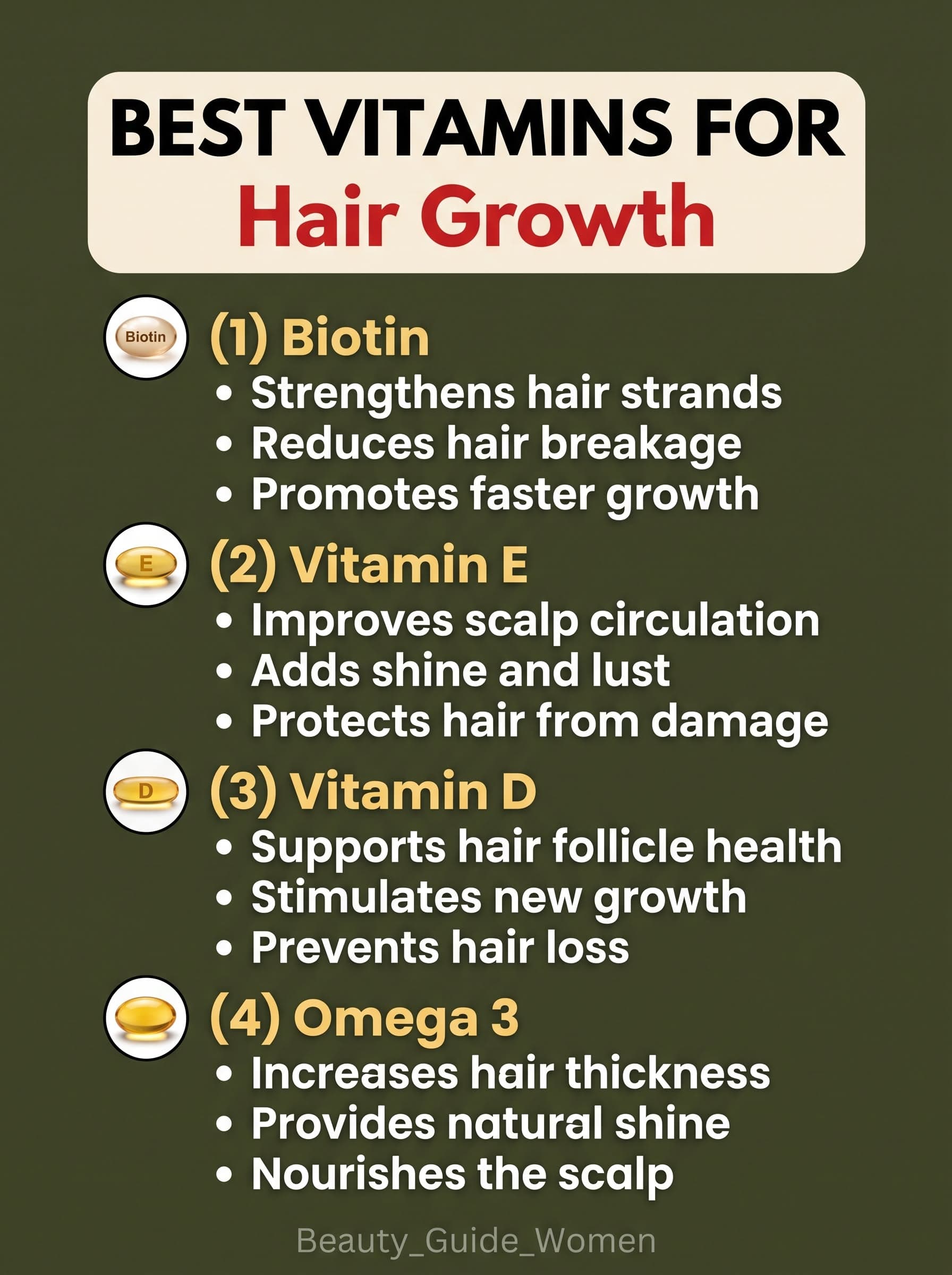
Here are the four nutrients that come up most consistently when the conversation turns from "what to put on hair" to "what to actually feed it."
Biotin
Biotin, also known as vitamin B7, plays a role in keratin production — keratin being the structural protein that makes up the hair strand itself. When biotin levels are genuinely low, hair often becomes noticeably more fragile and prone to breaking before it even has the chance to grow longer.
It's worth being clear about something most product labels leave out: true biotin deficiency is fairly rare in people eating a normal, varied diet. Supplementing on top of already-sufficient levels tends to produce limited extra benefit — the improvement people notice usually comes from correcting an actual shortfall, not from exceeding what the body needed in the first place. This is the one we keep in the cabinet. (paid link)
Vitamin E
Vitamin E is an antioxidant, and its main contribution to hair health is protecting existing follicles from oxidative stress — the kind of cumulative cellular damage that builds up over time from everyday exposure. Some research also points to improved scalp circulation, which matters because follicles depend on adequate blood flow to stay active.
The visible effects tend to show up as shine and resilience more than dramatic new growth — a supporting nutrient rather than a standalone solution.
Vitamin D
Low vitamin D has been linked in research to certain forms of hair thinning, including some cases of alopecia, likely because vitamin D plays a role in creating new hair follicles rather than only maintaining existing ones. It's also one of the more common deficiencies overall, particularly for anyone who spends most of the day indoors or lives somewhere with limited sun exposure for large parts of the year.
Unlike biotin, checking vitamin D levels with an actual blood test is worth considering before supplementing heavily, since the right dose varies a lot from person to person.
Omega-3 Fatty Acids
Omega-3s support the health of the cell membranes surrounding hair follicles and have a mild anti-inflammatory effect on the scalp — relevant because a chronically inflamed scalp is a less hospitable environment for healthy growth. The effect here tends to be more about thickness and shine than growth speed itself, since omega-3s are feeding the follicle's environment rather than the strand directly.
Fatty fish, walnuts, and flaxseed are the more natural routes to this one, though a fish oil supplement is a reasonable substitute for anyone who doesn't eat much fish.
A realistic way to approach this
None of these nutrients work quickly, and none of them work in isolation from the basics — sleep, stress levels, and overall diet still set the ceiling for what any single vitamin can do. Hair grows in cycles that span months, so it's worth giving any change at least eight to twelve weeks before deciding whether it's doing anything.
If you're looking for a simple starting point rather than assembling four separate bottles, a combined hair, skin, and nails formula with biotin is usually the easiest way to cover the basics without overcomplicating things. This is the one we've been using. (paid link)