How to Choose a Serum for Your Actual Skin Type
Retinol, vitamin C, niacinamide, hyaluronic acid — the serum-to-skin matching guide, the one-at-a-time rule, and the damp-skin trick that doubles hyaluronic acid's effect.
A serum is just a concentrated ingredient delivered in a light base — which means choosing one is really about choosing an ingredient, and matching it to what your skin is actually asking for. Most serum disappointments come from mismatches, not bad products: the drying retinol on already-dry skin, the hydrating hyaluronic acid on a face that never needed it. The matching is simpler than the shelf makes it look.
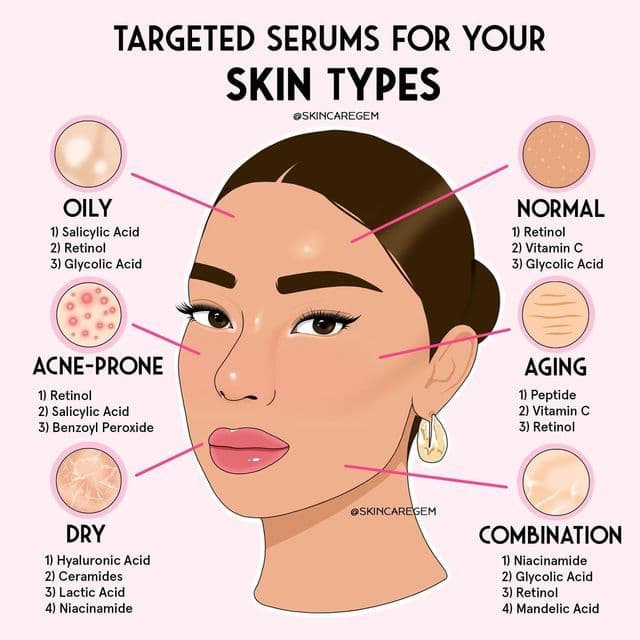
Dry, tight skin: hyaluronic acid — applied to damp skin. Hyaluronic acid holds water, up to a thousand times its weight, but it has to pull that water from somewhere. In dry air, it will pull it from the deeper layers of your own skin if the surface is dry, which is how a hydrating serum can leave skin feeling tighter. The fix is the trick nobody mentions: press it in over slightly damp skin, then seal with moisturizer immediately. Ceramides and squalane are the second string here — they add what dry skin is structurally missing.
Oily, acne-prone skin: niacinamide. It regulates sebum production, calms redness, and plays well with everything, which makes it the easiest active to keep using — and the one you'll actually finish. A salicylic acid serum a few nights a week complements it by keeping pores clear; start with the niacinamide daily, add the acid only if congestion persists.
Dull, uneven skin: vitamin C, in the morning. It brightens, supports collagen production, and works beautifully under SPF — some research suggests it even boosts sunscreen's effectiveness. Two rules: buy opaque, airtight packaging, because it degrades in light and air, and expect to replace it every few months. Oxidized vitamin C does nothing but smell faintly of warm pretzels.
Lines and texture: retinol, at night, slowly. It's the most evidence-backed ingredient in over-the-counter skincare, and the adaptation period is the price of entry: twice a week to start, a pea-sized amount for the whole face, buffered over moisturizer, with mild flaking expected for the first few weeks. Going slow isn't timidity; it's how you're still using it in month six, which is when it actually shows.
Two closing rules: change one thing at a time, so you know what's working and what's irritating; and give each serum a full skin cycle — six to eight weeks — before judging. The best serum on the market is the one you finish, because you used it correctly, because it suited the skin you actually have.