DIY Hair Masks for Dry, Damaged Hair: Four Recipes That Work
Avocado, banana, olive oil, and honey — four kitchen masks for dry, over-processed hair, what each one actually does, and the blending mistake that ruins all of them.
Dry hair rarely comes from not owning the right product. It comes from heat, sun, hard water, over-washing, and color treatments — all of which lift the cuticle and let moisture out. A weekly mask works by smoothing that cuticle back down and refilling it with fats and moisture, and honestly, the kitchen versions do this about as well as anything in a jar. The trick is matching the ingredient to the job and applying it properly.
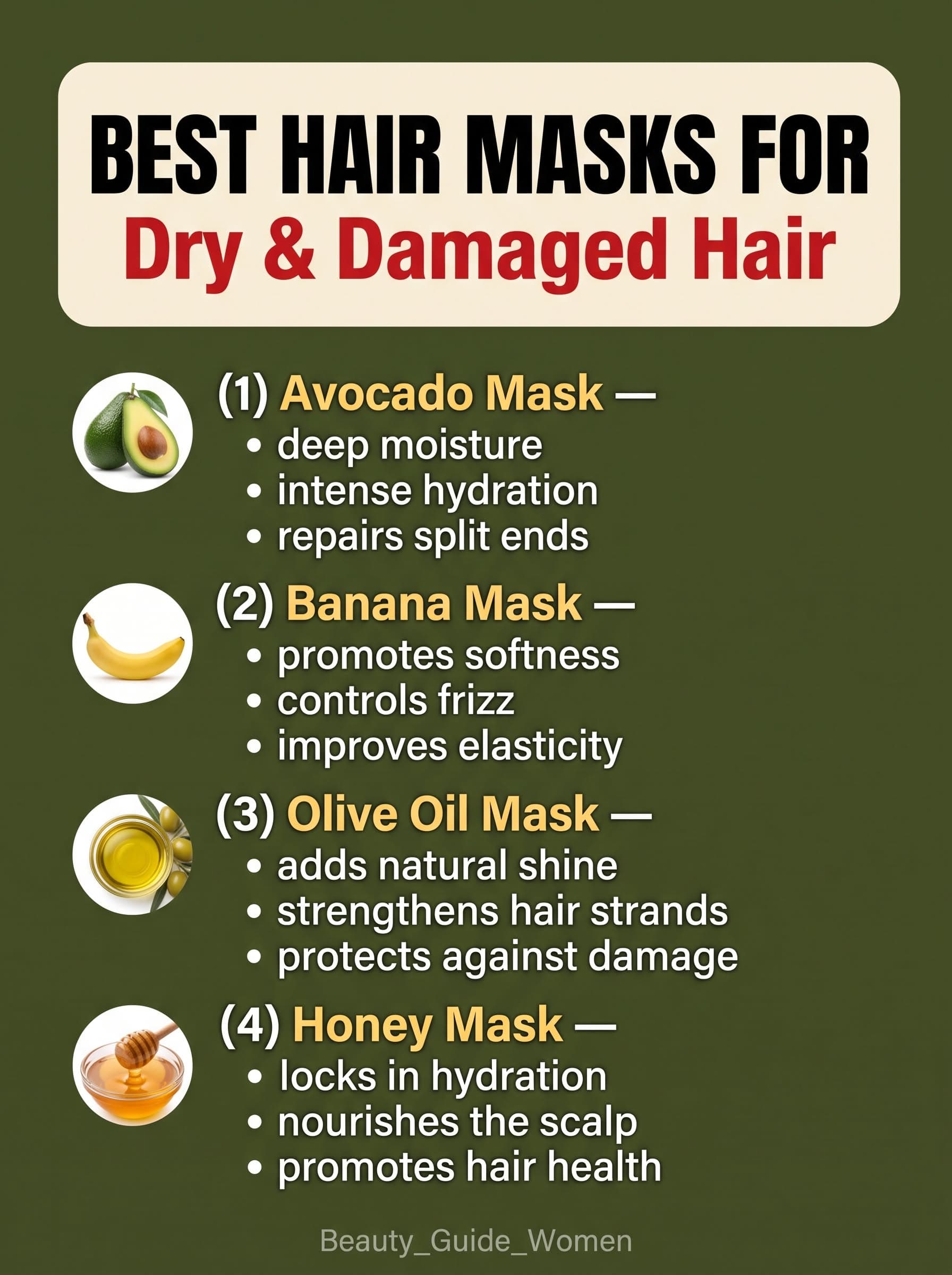
The avocado mask is the classic for a reason: it's rich in oils and vitamin E, both of which absorb into the hair shaft the way commercial conditioners try to mimic. Mash half a ripe avocado until completely smooth — lumps are the enemy, more on that in a moment — and work it through damp hair from the ears down. Twenty minutes, then shampoo. Hair feels noticeably softer after one use.
The banana and honey mask is the moisture option. Banana brings softness and a little natural shine; honey is a humectant, meaning it pulls water toward the hair and holds it there. Blend it — do not mash by hand. Banana bits are the single most common DIY mask disaster: they tangle into hair and survive two rounds of shampooing. Blend until it's a true liquid, mix in a tablespoon of honey, apply, rinse very thoroughly.
A plain olive oil pre-wash is the low-effort repair. Olive oil is one of the few oils shown to actually penetrate the hair shaft rather than just sitting on top, which makes it genuinely useful for over-processed hair. Coat the lengths, pile the hair up, leave it for thirty minutes — or an hour under a warm towel if the hair is really fried — then shampoo twice to get it out. This one is also the cheapest and the easiest to keep doing, which is most of the battle.
Honey on its own deserves a mention as the one-ingredient version: a thin layer on damp hair, fifteen minutes, rinse. It's humectant and mildly smoothing, and on a night when a full mask feels like too much, it still beats skipping.
Whatever the recipe, the method is the same: damp hair, focus on the mid-lengths and ends where damage lives, never the scalp; give it twenty to thirty minutes; rinse with lukewarm — not hot — water. And keep expectations kind. A mask is maintenance, not resurrection: it makes damaged hair look and feel better every week, but only a trim removes what's already split. Once a week, any of these four, is enough.