Four Essential Oils Worth Knowing (and How to Use Them Safely)
Lavender, tea tree, rosemary, and peppermint each have one thing they're genuinely good at — plus the dilution and patch-test rules that keep them safe.
Essential oils are the strongest argument for both enthusiasm and caution in natural beauty. They're genuinely potent — concentrated plant chemistry that does things — and that's exactly why they deserve rules. Undiluted oils on skin are a fast route to sensitization, and 'natural' on the label changes nothing about that. Diluted, respected, and patch-tested, four of them quietly earn their shelf space.
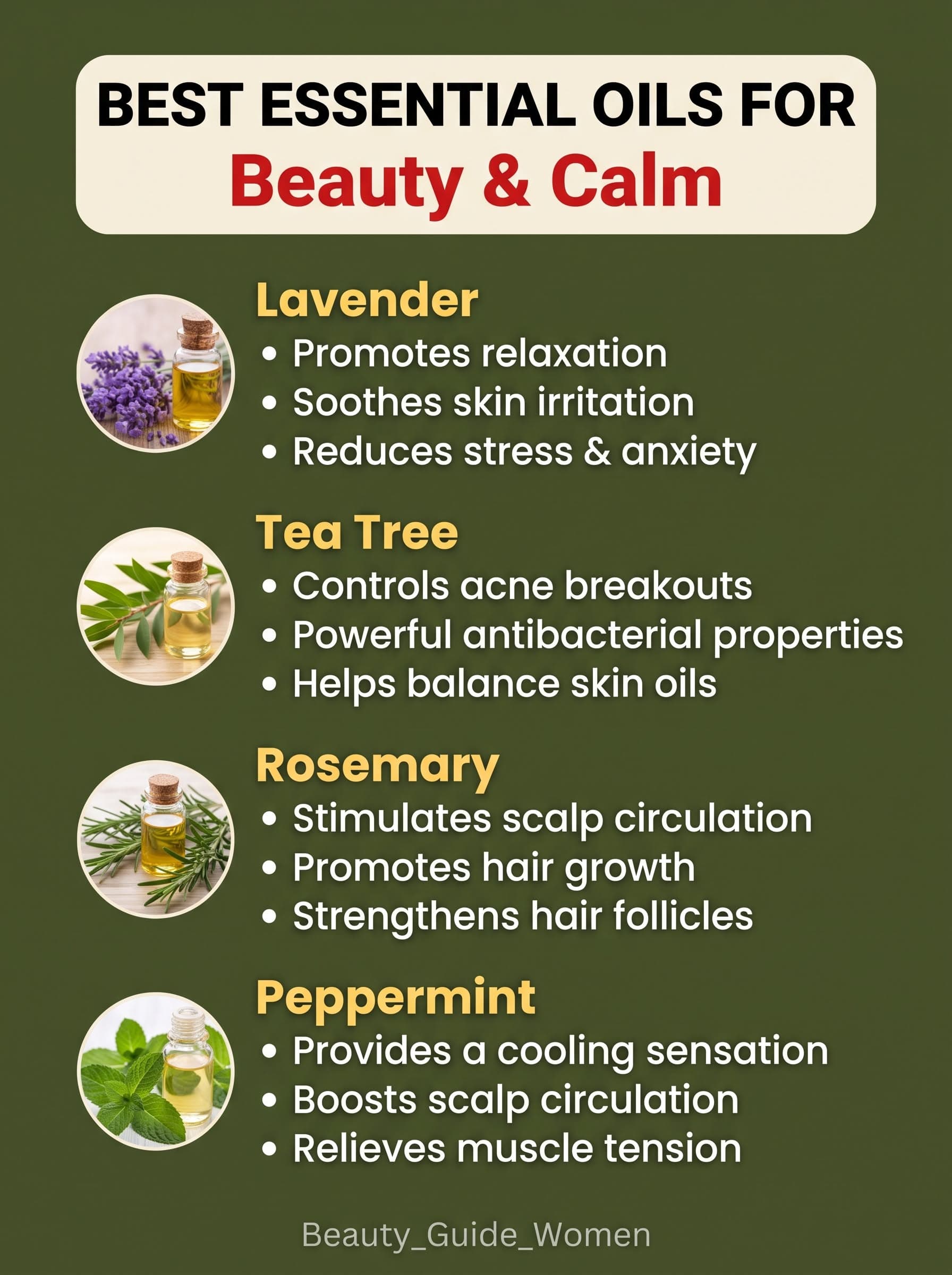
Lavender is the calm one, and it's not just scent folklore. Aroma studies link lavender to reduced anxiety markers and easier sleep onset, and it has mild antimicrobial properties too. Two drops on the inside of a wrist at night, or diluted in a tablespoon of carrier oil as a chest or pillow massage — this is the oil for the hour before bed.
Tea tree is the antimicrobial one with real clinical research. Trials of 5% tea tree oil gel show a meaningful effect on mild-to-moderate acne — slower than prescription options, gentler too. The critical number: never apply it neat. Dilute to about 5% — roughly nine drops per tablespoon of carrier — dab on individual blemishes with a cotton swab, and pause if the skin around them gets dry or flaky.
Rosemary is the scalp one. It's the oil behind the hair trial that gets cited everywhere, showing results comparable to minoxidil over six months — a small study, but a real one. Three drops in a tablespoon of light carrier oil, massaged into the scalp a few nights a week, washed out the next morning. The massage matters as much as the oil; treat them as one ritual.
Peppermint is the sensation one, and the sensation is the point. The cooling, tingling wake-up from menthol is real but often misread as growth — it's stimulation, not a follicle signal. Peppermint shines as an invigorating morning scalp splash (one drop in a bowl of cool water) or to cut mental fog in a desk diffuser. For growth claims, choose rosemary, and keep peppermint for feeling refreshed.
The safety paragraph that applies to all four: dilute in a carrier oil — one to two percent for the face, meaning three to six drops per tablespoon; patch-test on the inner arm for a day before facial use; keep oils away from eyes and mucous membranes; and check specific oils during pregnancy or with certain medical conditions, since a few are genuinely contraindicated. Treated like tools rather than perfumes, these four quietly cover calm, blemishes, scalp, and energy — a working apothecary in four small bottles.