
Why Self-Care Routines Fail (and How to Build One That Actually Sticks)
Most self-care routines collapse within a few weeks — usually for a predictable reason that has nothing to do with willpower.
Self-care routines tend to follow a familiar pattern: an ambitious start, a week or two of enthusiasm, and then a quiet disappearance with no clear moment where it "failed." The usual explanation is a lack of discipline, but the more common cause is simpler — the routine was designed for an idealized version of the week, not the actual one.
A ten-step evening routine sounds reasonable on a calm Sunday and becomes impossible on a Wednesday that ran long. When the routine can't survive a bad day, it doesn't get scaled down — it gets skipped entirely, and one skipped day quietly turns into the routine ending altogether.
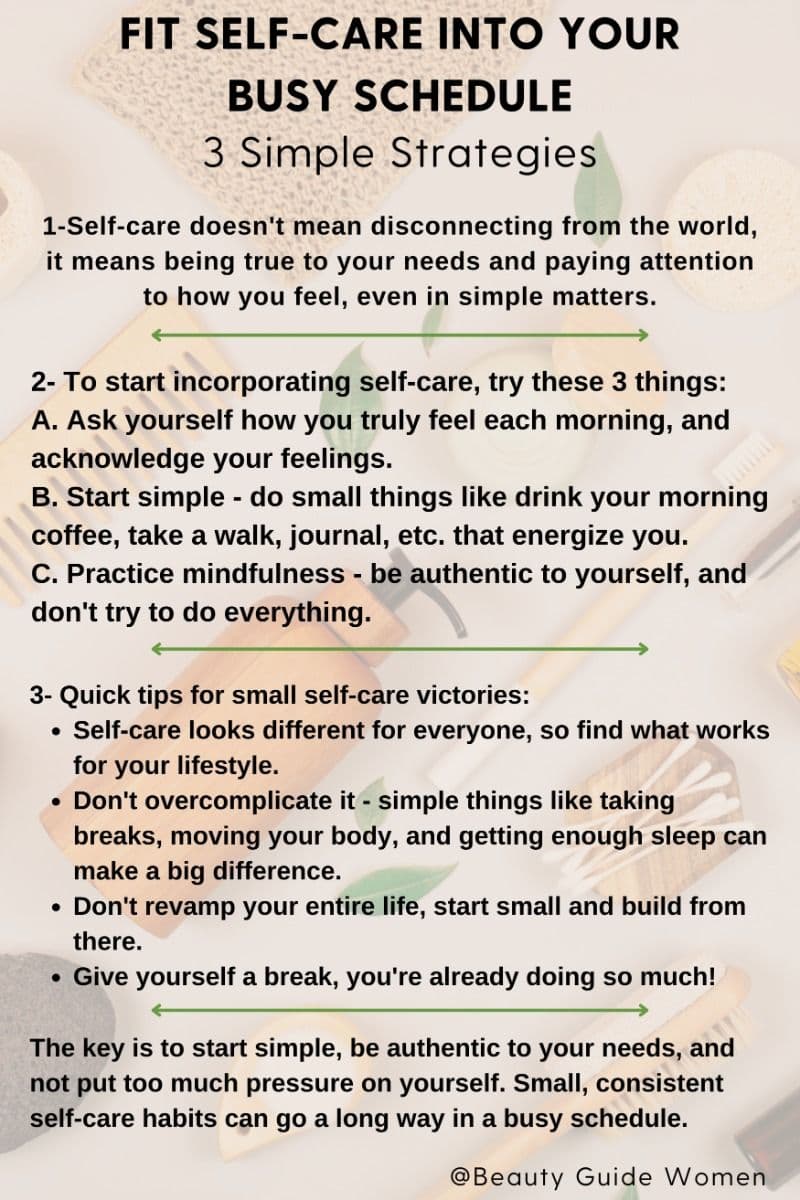
The habits that last tend to share one trait: they survive a bad day. A five-minute version that still happens on the worst days will outperform an elaborate version that only happens on the best ones. That might mean one skincare step instead of six, or five minutes of journaling instead of a full page.
Attaching a new habit to an existing one — after brushing your teeth, after making coffee — removes the need to remember or decide, which is where most routines quietly fall apart in the first place.
Tracking progress in a low-effort way matters more than people expect. Not out of obligation, but because it's easy to feel like nothing is changing when, in reality, a small habit repeated for a month adds up to something worth noticing — it's just hard to see that without something written down.
None of this requires a perfect plan. It requires a small enough plan that it survives contact with an actual week. If you want a simple structure to build this around rather than starting from a blank page, that's exactly what a day-to-day planner is for. This is the one we use.