How to Treat Acne Without Making It Worse
Most acne routines fail from too much, not too little — over-cleansing, over-scrubbing, and under-moisturizing. A calmer approach, and when to stop self-treating.
Acne has a cruel logic: it looks like a hygiene problem, so we treat it like one, and the over-treatment makes it worse. Harsh cleansers and scrubs feel productive and strip the barrier; a stripped barrier gets inflamed; inflammation deepens the very redness and marks we were trying to remove. The breakout worsens, we treat harder, and the cycle explains itself. Getting off that treadmill is half the treatment.
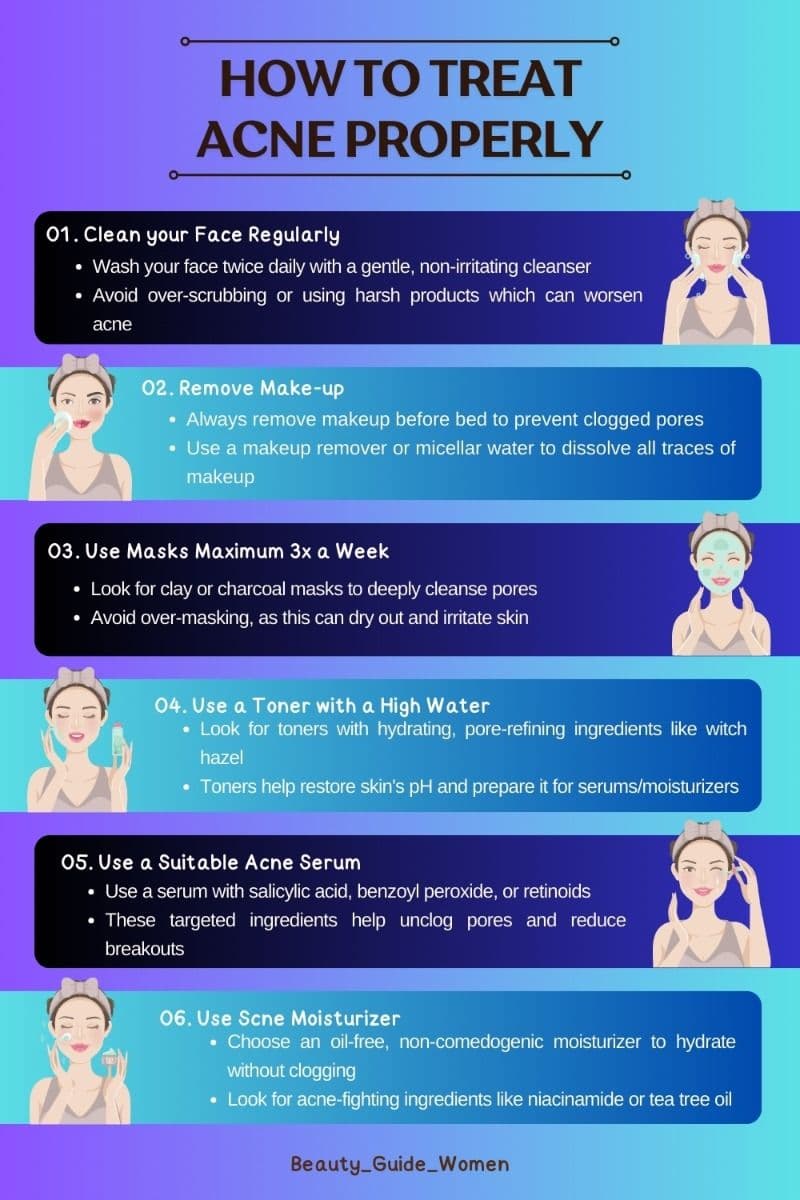
Cleanse gently, twice a day at most. A mild, non-stripping cleanser and lukewarm water. If skin feels squeaky or tight after washing, the cleanser is too harsh — that tight feeling is the barrier starting to complain, not cleanliness. Physical scrubs have no role on active breakouts; they micro-tear inflamed skin and move bacteria around the face.
Leave the spots alone — genuinely. Every squeeze pushes inflammation deeper, adds the risk of permanent scarring, and extends the life of the spot by a week or more. This is the hardest advice to accept, because picking feels like doing something. Spot-treat instead: a dab of diluted tea tree oil or your sulfur or benzoyl peroxide spot treatment, and cover it with a small plaster overnight if you truly can't keep your hands away — the plaster works better than willpower.
One active at a time. Benzoyl peroxide or salicylic acid — not the whole shelf at once. Introduce it every other night, and give it eight weeks before judging. Mixing multiple actives on already-stressed skin mostly layers irritation, and irritated acne is more visible and more scarring than calm acne. Adding more products at the first setback is how a two-product problem becomes an eight-product one.
Moisturize, even on oily, breaking-out skin. This is the step acne-prone people skip and the one that quietly matters most. Skin that has been stripped produces more oil to compensate and heals slower with no moisture barrier in place. A light, non-comedogenic gel moisturizer keeps the cycle from restarting — look for 'non-comedogenic' on the label and ignore marketing words like 'detox'.
Know when to escalate: deep, painful cysts, breakouts that leave scars, sudden severe onset, or anything that hasn't responded to consistent care after two to three months — that's dermatologist territory, and going sooner rather than later saves years of trial and error, because prescription treatments work faster and cheaper than guesswork. For ordinary acne, the formula is almost embarrassingly simple: gentle, patient, consistent — the exact opposite of what panic buys.